
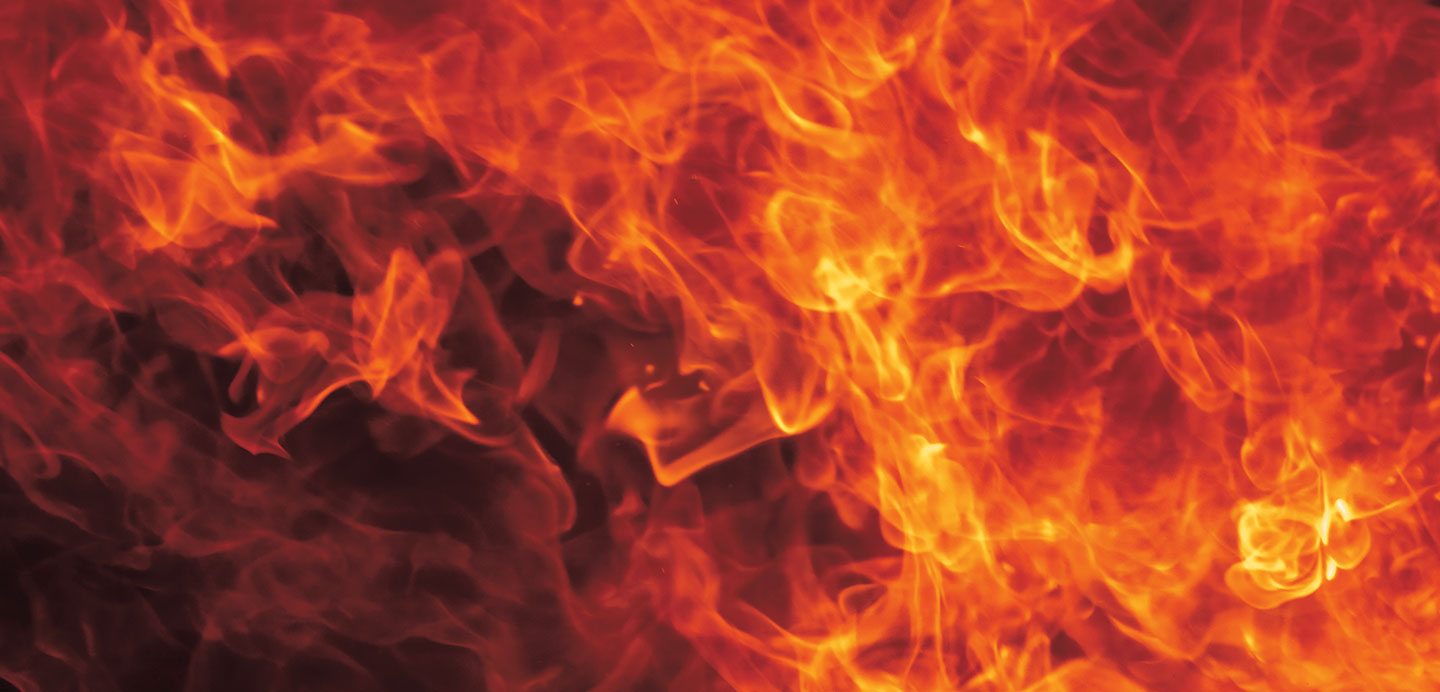

Each year, an average of 70,000 wildfires blaze across the United States. These fires can burn out of control, destroying homes, schools, businesses, and even entire towns.
Sara McAllister actually starts fires. Why? She’s a wildfire researcher at the Missoula Fire Sciences Laboratory in Montana. McAllister studies how fires burn and spread. The data is used to help protect people from wildfires. McAllister spoke with ScienceSpin about her work.
ScienceSpin: How do wildfires start?
Sara McAllister: Fires need three things to start burning: heat, fuel , and oxygen. Intense heat causes the fuel and oxygen to combine and go through combustion. We’re surrounded by fuel and oxygen. Heat can come from a lightning strike, a match, a spark from a campfire, or other sources. As more fuel gets hot and burns, the fire can spread.
SS: How do you study wildfires in your lab and what kinds of experiments do you do?
SM: We do experiments with fire in a metal warehouse called a burn chamber. The chamber has tools to adjust the conditions inside. It’s like controlling the weather! We can make it hot, cold, dry, or windy. I use these tools to investigate how things catch fire and how they burn in different conditions. To stay safe, I wear gloves, masks, and cotton clothing.
Many types of experiments happen at the lab. Some scientists study how trees respond to fire. Others study the smoke. A team puts together all the research.
SS: What’s the focus of your research?
SM: One area I’m interested in is how fire spreads through piles of pine needles. I want to understand how a pile’s shape affects how air flows around it. This affects how fast a fire burns.
For my experiments, I often use wooden sticks instead of real pine needles. They’re easier to measure and observe. I glue the sticks into different shapes and set them on fire. Then I observe how long they burn and how high the flames reach. I repeat each experiment up to five times to make sure I get similar results.
SS: What do you do with the information you learn from your experiments?
SM: Scientists use data like ours to create digital models. These computer programs can predict how fires will burn. During a fire, officials enter information into a model. The model calculates how fast the fire is spreading and plots where it may spread on a map. This information lets officials know when and where people need help.
SS: What concerns you the most about wildfires?
SM: Wildfires are impacting people more and more. As Earth’s climate warms, the summers in some places get hotter and drier. This can lead to intense fires that cover vast areas.
That’s why it’s so important to make better models. So we can help keep people healthy and safe from future wildfires.